
Google Translate is one of the most impressive pieces of technology ever built. It handles over 100 languages, processes billions of translations daily, and has made the world more connected in ways that were unimaginable just a decade ago.
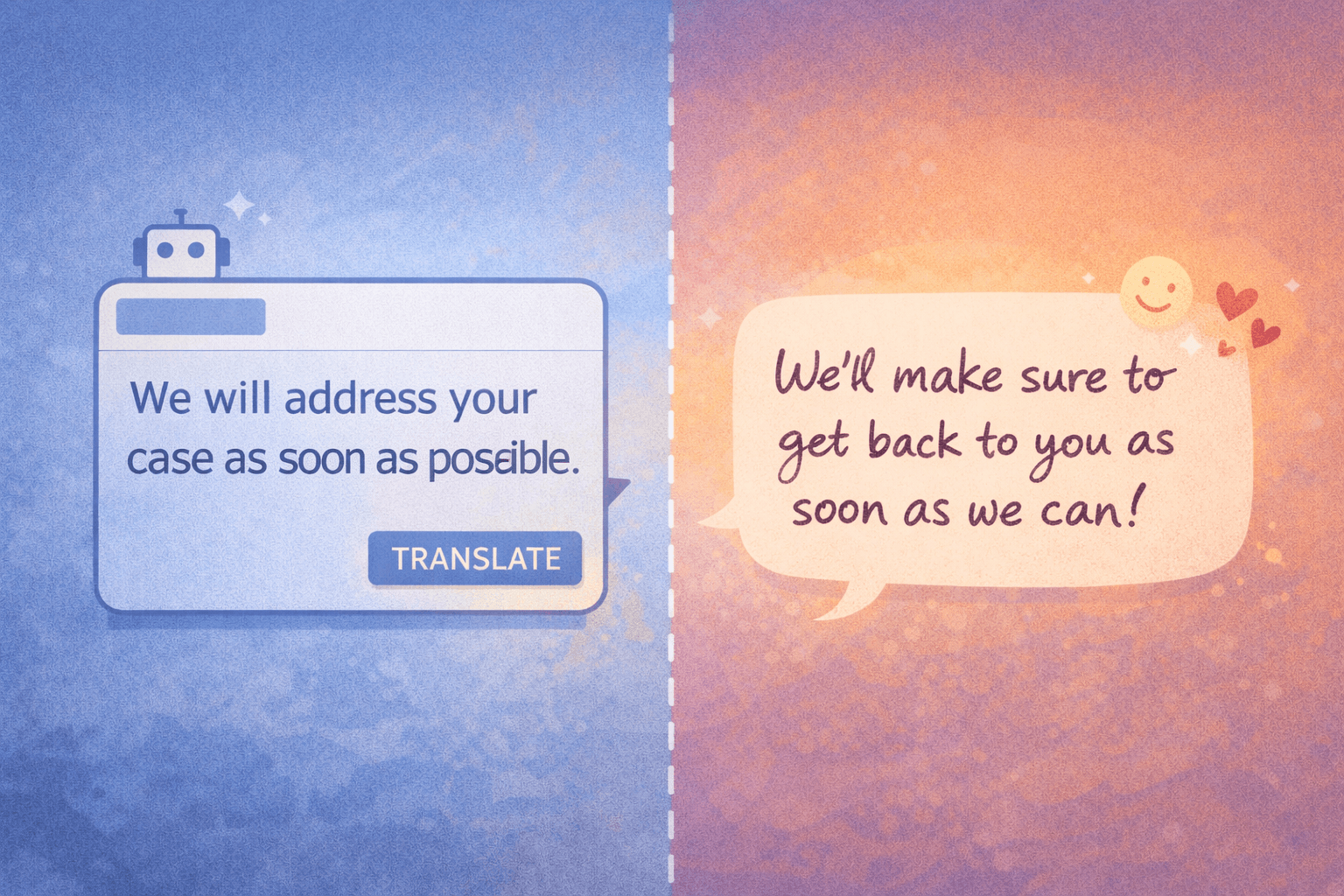
But if you've ever pasted a work email into Google Translate and used the output as-is, you probably already know: something was off. The words were technically correct, but the message didn't sound like you. It didn't sound like anyone, really. It sounded like a machine pretending to be a person.
For casual use — ordering food abroad, reading a foreign news article, understanding a quick text — translation tools are fantastic. For professional communication, they're not enough. Here's why.
What translation tools are good at
Let's give credit where it's due. Modern translation tools excel at:
- Word-for-word translation. They accurately translate individual words and simple sentences across dozens of languages.
- Quick comprehension. Need to understand the gist of a document in a language you don't speak? Translation tools are perfect for this.
- Travel and everyday use. Asking for directions, reading a menu, understanding a sign — these tools handle it effortlessly.
- Improving steadily. Neural machine translation has made enormous progress, and the quality continues to improve year over year.
For these use cases, Google Translate (and similar tools like DeepL) are genuinely excellent. The problem starts when you try to use them for something they weren't designed for.
Where they fall apart
Tone
Professional communication isn't just about what you say — it's about how you say it. The same message can sound confident, tentative, friendly, or cold depending on tone. Translation tools don't understand tone because they're optimizing for accuracy, not impact.
What you meant: "I'd love to discuss this further — could we set up a quick call this week?"
What the tool might produce: "I want to discuss this more. Can we have a call this week?"
The second version isn't wrong, but it's flatter. It strips out the warmth and collaborative tone that makes professional communication effective.
Context
Translation tools process sentences in isolation. They don't know that you're writing to your CEO versus a close colleague, that you're delivering bad news versus sharing good news, or that your industry uses certain terms in specific ways.
A message to your manager about missing a deadline requires a very different tone than a message to a teammate about grabbing lunch. Translation tools treat them the same.
Formality levels
Every language has registers — levels of formality that native speakers navigate instinctively. English is no different. The way you write in a Slack channel is different from an email to a client, which is different from a board presentation.